
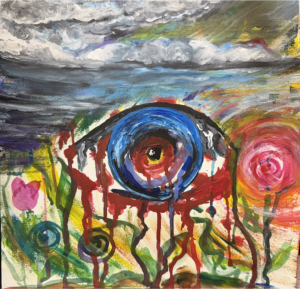
I think when people think of art therapy, they often envision a child finger painting or playing with figurines in a sand box. While it is absolutely true that many children thrive in a therapeutic art environment, art-based approaches are equally as effective for adults. One key ability art therapy has is the capacity to help you externalize your inner world—put your thoughts and feelings outside of yourself. Here are some reasons externalizing is beneficial:
Untangle the tangled:
When you decide to come to therapy, your inner world might feel really complex. You may be trying to make decisions, or just trying to understand a tangled web of thoughts and feelings. Putting the pieces and layers onto paper one at a time can help organize and clarify what is happening internally—making it easier to understand and address.
Creating emotional distance:
When you externalize your emotions using art media, they become something you can observe. It tends to feel less overwhelming w
hen you look at feelings from a safe distance than when you are caught up in the middle of them. This distance can make intense feelings more manageable.
Sense of control
When thoughts and feelings are on paper, they become tangible and easier to work with. You can reflect on, adjust, and re-interpret what you have created. You can move things around and play with different choices or
outcomes. This can help you gain a sense of control over internal experiences.
New perspectives
Seeing your thoughts and emotions represented visually can lead to new insights. You may notice patterns, symbols, or connections that w
eren’t obvious before. New insights can mean new options, solutions, or acceptance
.
Burping the emotional lid:
Holding in emotions can build internal tension or pressure—think of shaking up a bottle of pop. Externalizing emotions through art provides a release. Burping the lid can let some of that built up emotion out in a safe way.
Encouraging self-compassion
When you externalize your emotions, you get to look at them from the outside. This can foster a kinder, less judgmental perspective toward yourself. Have you ever been really mad at yourself and had someone ask, what would you say if it were a friend in this same situation? Many of us are much kinder and more lenient toward other people than we are to ourselves. Externalizing allows that space to acknowledge feelings without being completely defined by them.
Externalizing thoughts and emotions in art therapy can help you take internal experiences and transform them into something visible and tangible, making healing and understanding more accessible. Did I miss any benefits of externalizing your emotions? Drop a comment!